
Artificial intelligence is transforming the beauty industry at an unprecedented pace. This sector, worth 68.9 billion dollars in 2024, is predicted to reach almost 80 billion dollars by the end of 2025. Moreover, this growth could contribute an additional 9-10 billion dollars to the global economy.
But behind this rapid growth lies a truth that most professional makeup artists don't talk about openly: Artificial intelligence applications in beauty. While they show off their talents on social media, behind the scenes many artists are quietly using AI tools to improve makeup techniques and test new ideas. In fact, these technologies are reshaping beauty trends in ways that consumers are not aware of.
As we approach 2025, the integration of beauty and technology is entering a critical turning point. Personalized targeting can increase conversion rates by up to 40%. 77% of beauty professionals believe AI-powered chat agents have unique potential to create personalized experiences. Also, 67% of Gen Z prioritize sustainability and therefore AI is now becoming indispensable in developing natural & organic products.
💡 At this point, one of the most innovative solutions developed for consumers is Longos Sense Kit. This artificial intelligence-supported device scans your skin and offers the moisture, collagen support and brightening effects you need in a personalized way. In short, It brings scientific skin care to your home.
The Rise of Artificial Intelligence in the Beauty Industry
The global AI beauty market was valued at $2.68 billion in 2022 and is expected to reach approximately $6.80 billion by 2027, with an annual growth rate of 14.4%. This dramatic increase heralds fundamental changes in the way consumers interact with beauty products and services. Now, every field, from product development to customer experience, is being reshaped by artificial intelligence.
How Is AI Changing Consumer Trends?
Artificial intelligence is radically transforming consumer behavior in the beauty industry. Now users can choose products that take into account their skin type, needs and preferences. personalized recommendations waiting. Research shows that AI-powered personalization apps can increase conversion rates by up to 40%. That's why this technology has become inevitable for visionary brands.
Especially after the pandemic, with in-store trial opportunities restricted. virtual trial technologies came forward. Using facial recognition and augmented reality, these AI-powered tools offer the user a realistic preview of the product. Thus, the shopping experience becomes both hygienic and sustainable. Giant brands such as L’Oréal and Sephora have adopted these technologies to bridge the gap between online shopping and in-store experience.
Consumers' priorities have also changed significantly. Now, rather than the stories of brand founders or demographic-focused advertisements, the following factors come to the fore:
- Product quality and effectiveness
- Common aesthetic perspective
- Data-driven personalized solutions
- Sustainability and transparency
In response, next-generation AI tools provide consumers with more information about ingredient safety and product effectiveness. This makes it easier for brands to respond to transparency demands.

Why Is 2025 a Turning Point in Beauty and Technology?
The year 2025 will be a historical turning point at the intersection of beauty and technology. Online sales channels are expected to reach almost a third of global beauty sales in 2025, up from 26% in 2024. This growth is paralleled by major advances in AI capabilities that impact the entire product lifecycle, not just marketing.
At CES 2025, people with the capacity to learn and make decisions independently agentic artificial intelligence (agentic AI) was one of the topics that attracted the most attention. Thanks to this technology, beauty brands, AI robots that offer personal skin care in 3 minutes or Automated systems providing 20-minute salon-quality gel manicures can develop.
These developments create great opportunities for beauty professionals who are open to innovation. Brands that adopt artificial intelligence can both increase operational efficiency and quickly adapt to consumer expectations. But there is a striking statistic: only 10% of managers use AI regularly, while 60% are still in the experimental phase.
📈 According to McKinsey's 2025 analysis, "fast-moving brands will accelerate even more, and those left behind will have difficulty maintaining their market share." Artificial intelligence is no longer a competitive advantage basic condition of existence it becomes.
💬 Longos Sense Kit It is right at the center of this transformation. This device analyzes skin moisture, wrinkles, redness and tone balance in seconds; The home representative of artificial intelligence-supported personal care.
➡️ “Do your skin analysis, apply the smart serum, see the result instantly.”
Making technology a part of the beauty routine, Longos Sense Kit brings the future to today.
Artificial Intelligence Facts That Professional Makeup Artists Aren't Telling
Although seemingly everything is created with brush strokes, artificial intelligence has a hidden role behind the scenes. Many professional makeup artists use it to boost their creativity and achieve flawless results. AI powered tools is using. However, they usually do not express this openly.
AI-Generated Makeup Look or Human Art?
Professional artists are now designing new concepts with the help of AI. However, most of these images are shared with the tag "entirely my own creation". This blurs the line between “art and technology.”
The difference between AI and the human touch is becoming more subtle:
- AI is mathematically perfect in symmetry and color harmony perfect.
- human hand, skin texture and product behavior He understands nuances like.
- AI, hundreds of variations of a single look can create instantly.
- If human, with emotional intelligence and empathy It adds personal touches.
Many famous makeup artists specifically use AI like a “digital sketchbook.” They visualize their ideas in artificial intelligence before touching their face. However, they do not talk about this process externally, because the image of "purely human creation" is still considered more prestigious.
💡 At this point, Longos Sense Kit developed AI skin analysis technology Similarly, it brings together art and science. While artists select color tones intuitively, this device detects skin needs with scientific accuracy.
➡️ Thus, “visual aesthetics” is no longer just an artistic choice, a scientific balancing act it becomes.
The Unseen AI Effect in the Influencer World
While social media make-up content mostly claims "naturalness" and "sincerity", the situation behind the scenes is very different.
While many influencers produce content AI-based editing tools is using. These tools are not limited to just filters; With advanced facial recognition algorithms, it regulates facial symmetry, balances color tones and even reshapes some facial features.
Thus, what the viewer sees as “flawless makeup” actually becomes an AI-powered visual optimization.
In addition, sharing timing, interaction rate analysis and content ranking are now With AI prediction models is managed.
In other words, many sharings that seem spontaneous are actually driven by artificial intelligence. a strategic timing product.
Testing Trends Before Launch: Makeup Artists' Secret Weapon
Perhaps the most surprising fact is that professional makeup artists testing new trends with AI before releasing them to the public.
Nowadays, many artists first create possible trends in the digital environment, then test them with limited user groups to measure which ones will attract attention.
With this method, artists:
- With its AI visualization, it can create dozens of trend ideas in a few hours.
- Thanks to virtual trials and focus groups, it measures which trend will be liked.
- It optimizes its techniques and shapes product recommendations based on this data before the actual launch.
This method is used in fashion and beauty It has radically changed the “seasonal launch” culture. While it used to take months for a trend to spread, now, thanks to AI, feedback can be received and redesigned within a few days.
Also, many artists AI-powered color analysis tools It scans thousands of fashion photos and predicts the prominent color stories of the new season. Although this is touted as “inspiration”, it is actually completely data driven forecasting.
💡 Longos Sense Kit also brings this approach to home users.
The device works with quantum sensors, microscopic changes in your skin color It analyzes and recommends a special care routine for you.
👉 In a sense, it's like your “personal AI trend test”: every morning it tells you what care your skin needs that day.
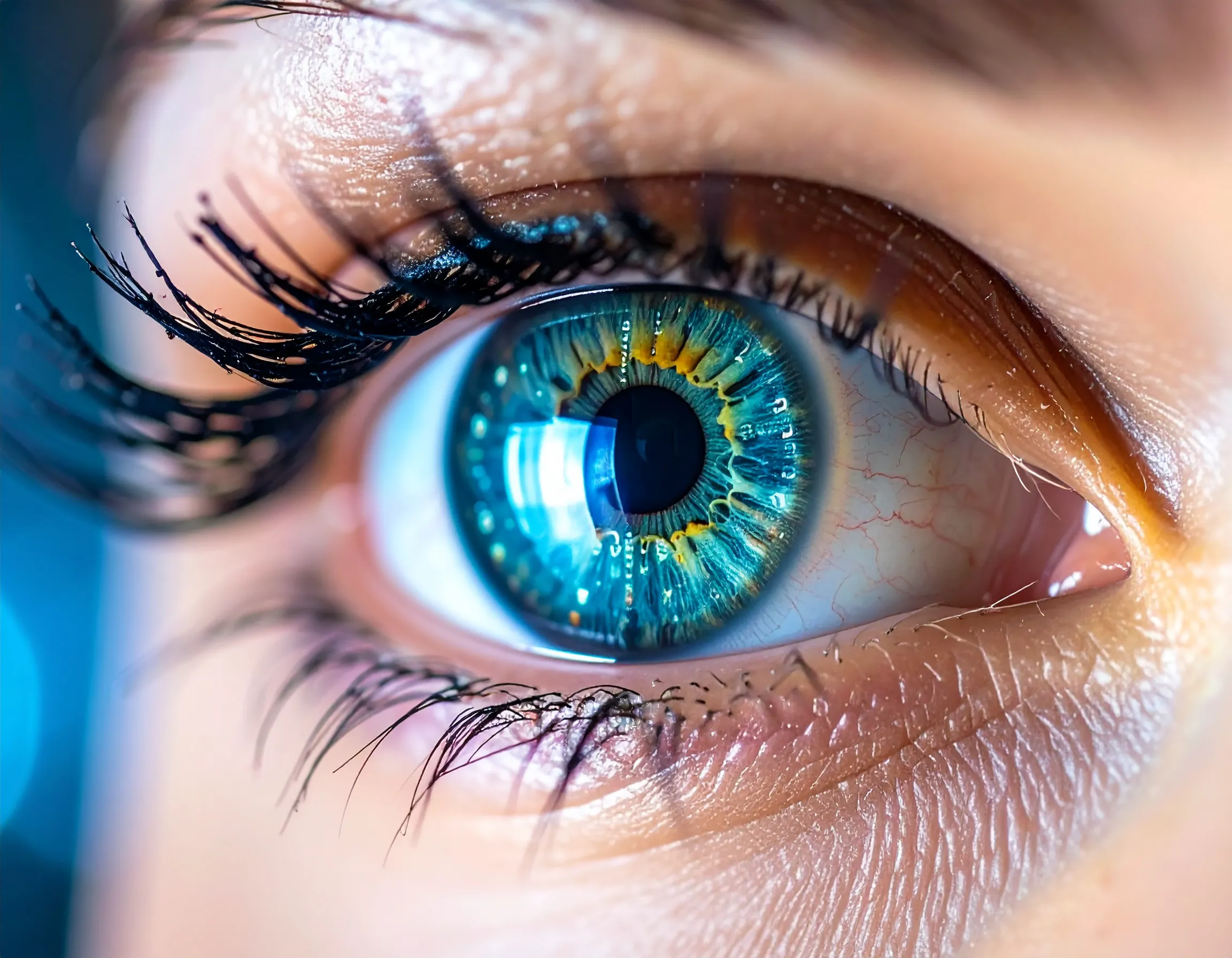
4 Major Artificial Intelligence Applications Transforming Beauty in 2025
Artificial intelligence is no longer just an analysis tool; At the center of all processes such as product development, marketing and customer experience. According to McKinsey's 2025 research, four main areas of AI use that radically change the industry stand out:
1. Hyper-Personalized Product Recommendations
AI-supported skin care recommendations have evolved from simple surveys to advanced analysis systems.
L'Oréal Beauty Genius platform suggests personalized combinations from more than 750 products.
Similarly, Unilever's BeautyHub PRO The system analyzes 30 different visual data from a selfie and offers cross-brand recommendations to users.
📊 Result?
Customers using these systems increase their probability of purchasing by 43%, and the average basket increases by 39%.
💬 Longos Sense Kit brings this power of personalization to your home.
With AI-powered skin scanning, you your day, season and age group. offers care recommendations tailored to your needs.
➡️ “Your own dermatologist at your home with just one click!”
2. AI Powered Virtual Trial and Skin Analysis
The combination of augmented reality and AI is no longer just an “experiment,” professional analysis It became a tool.
L'Oréal's virtual makeup simulator can create an almost real makeup look by recognizing 63 different facial points.
Perfect Corp Live Skin Analysis system, such as blemishes, wrinkles and pores. 15 different skin problems detects it instantly.
A medical spa after implementing AI analysis 31% increase in repeat visits, 47% growth in customer spending saw.
📍 Longos Sense The kit has simplified this technology for home users:
Smart device connected to your phone, 3 minute skin scan It recommends serum, moisturizer and care time for you.
Scientific accuracy + personal convenience = professional care at home!
3. Rapid Testing of Packaging and Brand Concepts
AI is no longer just about skin care, but also about brands' design processes also redefines it.
New packaging or logo ideas can be generated in seconds on AI platforms.
Moreover, in this way, brands can collect consumer feedback and predict which design will attract more attention.
This approach reduces concept development time by 60% shortens it.
In other words, “month-long brand tests” have now become “a few days of data trials”.
4. AI Revolution in Product Formulation
Artificial intelligence has also accelerated the product creation process.
In the past, the formula of a serum was determined through months of experiments.
Now AI analyzes the ingredients' ingredients and skin type data, It automatically recommends the most effective formulation.
According to McKinsey's report, this technology
⏱️ reduces research time from weeks to days
💰 Saves up to 5% on raw material costs.
This system is especially revolutionized anti-aging products.
Being able to test peptide combinations that support collagen production in seconds has increased the speed of product development.
✨ Longos Sense Kit, brings this process to the user side.
Working with Quantum RF technology, the device analyzes your skin's current needs and your own smart serum balance It creates.
➡️ “You are no longer just a user, you are the manager of your own beauty laboratory.”
How Are Beauty Brands Applying Artificial Intelligence?
In 2025, most major beauty brands are not developing their own AI technologies from scratch.
Instead, existing systems strategically adapting or customizing.
These two different approaches are used in the industry.taker” and “shaper” strategies are known as.
Taker vs. Shaper Approach
Taker approach, refers to brands that integrate ready-made AI solutions with minimal customization.
This method is especially small brands It is much more affordable in terms of cost.
It is possible to provide fast service to customers with ready-made API or chat bot systems.
In contrast shaper approach, which means the brand trains existing AI platforms with its own data.
This is preferred by larger companies, personalized targeting And Communication compatible with brand voice This is the strategy used for.
Some brands are a hybrid model adopts:
They establish a scalable structure by combining the speed of Taker systems with the efficiency of the Shaper model.
This approach is seen as the most balanced strategy for future beauty giants.
💬 Longos Sense Kitworks as a reflection of this hybrid model on the user.
It combines data collected from personal skin analysis with the speed of ready-made AI systems —
So for every user “a unique care experience” creates.
➡️ “Ready technology + personal data = a care routine completely tailored to you.”
Why Aren't Brands Developing Their Own AI Systems?
The AI development process requires high cost and expertise.
Machine learning engineers, data scientists and chemistry experts need to work in coordination.
This is for most brands It is not economically sustainable.
Plus, beauty brands' core expertise isn't technology — human aesthetics and experience.
So instead of building AI systems, they are turning to collaborations and outsourced solutions.
At this point, the most logical solution for brands is Integration with reliable AI-based systems such as Longos Sense Kit establish
By connecting their own data to these platforms, they can create a model that is both scientific and user-friendly.
Integration with Digital Content Systems
Beauty brands now inevitably use AI support in content production.
Where all photos, videos and visual materials are stored Digital Asset Management (DAM) systems,
Thanks to AI, it is automatically tagged, categorized and organized.
In this way, brands:
- Maintains a consistent brand identity,
- It automatically detects incorrect logos, wrong colors or disproportionate designs,
- It significantly reduces the burden on marketing teams.
✨ The same principle applies on the user side of the Longos Sense Kit:
While AI analyzes visual data of the skin, each new scan automatically tags and archives.
In other words, the system turns into a personal care assistant that "gets to know you better" over time.
Risks and Realities of Artificial Intelligence in Beauty
“Beauty is not just a result, it is a feeling.
If we work in the right way, we can activate this emotion —
“We reach what is felt, beyond what is seen.”
—
Ray Booth, Aesthetician and Design Philosopher
AI can be a great tool;
but ethics, justice and trust It raises serious questions on the subject.
1. The Problem of Bias in AI Systems
in 2016 Beauty.AI competitionrevealed the dark side of artificial intelligence:
Almost all of the winners were light-skinned.
This is because the models are largely It was because she was trained according to Western beauty standards.
Researches, For women with darker skin, the error rate was 34.7%.,
Only in light-skinned men %0,8 shows that it is.
This difference proves how dangerous consequences a lack of diversity can have.
Longos Sense The Kit team takes a different approach on this issue.
The skin analysis algorithm of the device, with over 100,000 datasets from different ethnicities trained.
In this way, regardless of skin tone fair analysis can offer.
➡️ “True beauty comes from diversity.”
2. Data Privacy and User Trust
Artificial intelligence systems require personal biometric data.
This is one of the most sensitive areas in terms of "data security".
If brands do not provide transparency, they will suffer both legal and reputational damage.
Therefore, it is of great importance to clearly state how user data is processed.
The Longos Sense Kit is an exemplary model in this regard:
All skin analysis data encrypted on local device And It is transferred to the cloud only in an anonymized form.
So, the system knows you, but it doesn't know who you are — it just understands your skin. 🔒
3. Why the Human Touch Is Still Indispensable
AI is a great analyst, but a bad artist.
Algorithms calculate mathematical symmetry perfectly,
but emotional connection, understanding cultural difference, intuitive perception of beauty It is still uniquely human.
So, no matter how powerful the outputs of AI systems are,
final decisions again human expertise and aesthetic eye should direct.
At this point, Longos Sense Kit offers a solution that balances people and technology:
AI does the analysis but not the final recommendation to the user's feeling leaves it flexible.
➡️ “Your intuition + his intelligence = perfect harmony.”
Conclusion: The Future of Beauty Humans and Artificial Intelligence Hand in Hand
As we approach 2025, the beauty industry is on the verge of a brand new era.
Artificial intelligence is increasing its impact in every field, from skin care to product formulation, from design to marketing.
However, behind the scenes of this transformation, there is still human touch And ethical responsibility there is.
Now the question is “AI or human?” not.
The beauty of the future in the harmonious dance of both secret.
💎 Longos Sense Kit, the embodiment of this philosophy:
It brings together your skin with science and your care with emotion.
With each scan, it learns a little more, becomes a little more personalized, and eventually grows with you.
“The future of beauty is not just what is seen, it is what is felt.”
🔍
Highlights (Key Takeaways)
- Most professional makeup artists It uses AI tools silently.
- AI market in beauty Reaching 80 billion dollars in 2025 is expected.
- Instead of developing their own systems, brands ready + customized (taker–shaper) prefers models.
- AI bias is still a risk: the error rate for dark-skinned people is 34.7%.
- human expertise And ethical data management, the most important elements of the future.
💬 Last Word:
AI technologies make beauty not just “fast” but “smart”.
But let's not forget — even the most advanced algorithm cannot understand the warmth of a smile.
✨ Discover Longos Sense Kit for beauty that shines with science and finds meaning with people.